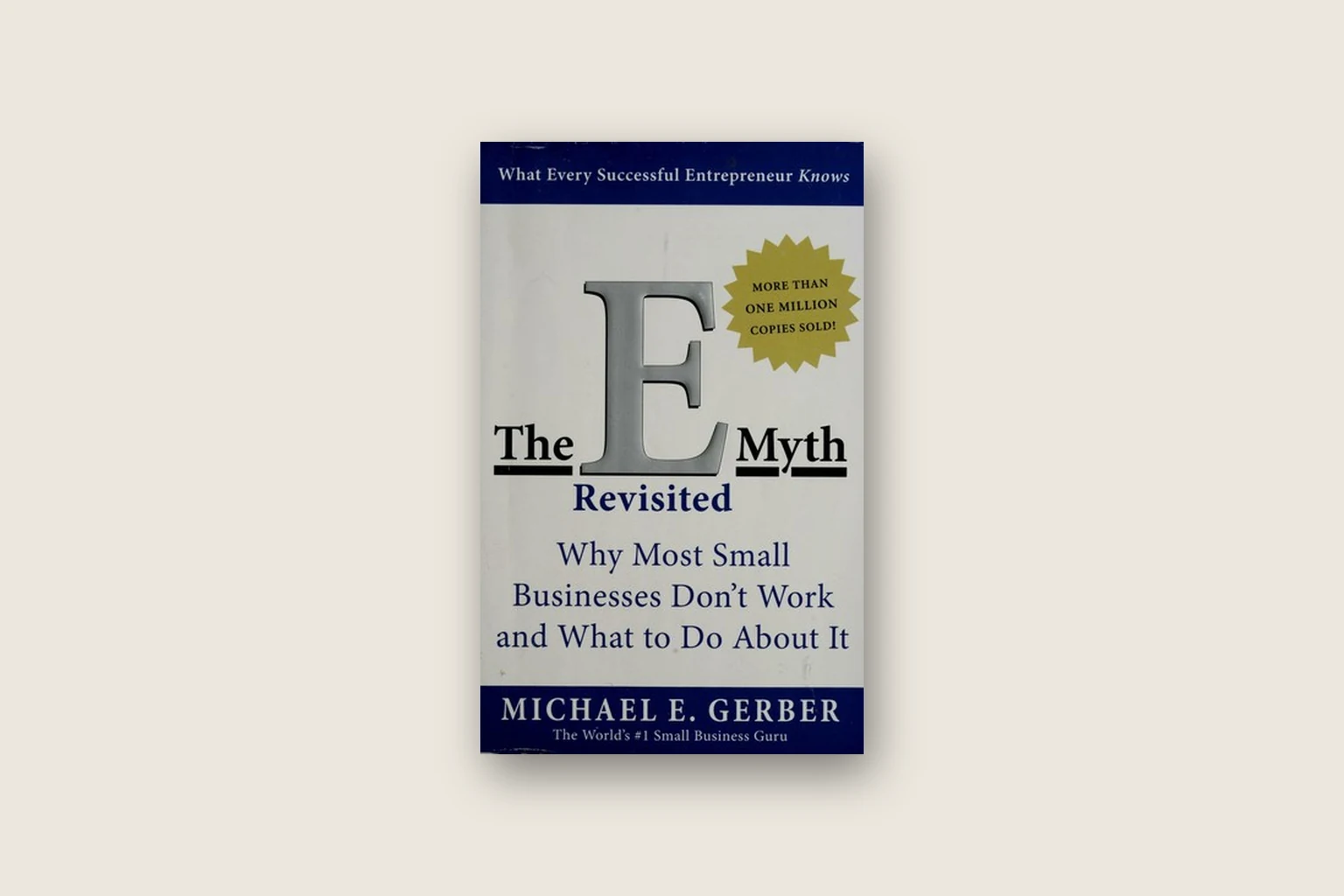
I finished The E-Myth Revisited, and I have a verdict. The strange part is how much of it I had already lived. I recognised my own life in it, and it gave me names for the mistakes.
The life cycle, and where I was in it
Gerber says a business goes through three ages: infancy, adolescence and maturity. I’ve been through the first two in my own work more than once.
Infancy is when you and the business are the same thing. That was my freelancing. I was the programmer, the one who talked to the client and the one who fixed the bug at midnight. If I stopped, it all stopped.
Adolescence starts with the first hire. And this is the part I lived the most.
Delegation without a system is abdication
When a programming project got big, I would bring in a developer. Then I would send them the repository link and say “start working.”
No onboarding. No explanation of how the project is built, what the standards are, what done looks like. And then things got messed up, and in the end it was my problem, because I never onboarded them properly.
Gerber has a name for exactly this: abdication. You hand over the work with no system and call it trust. When it goes wrong you take it back and decide that if you want it done right, you have to do it yourself. I did that more than once. The book made me see that the developer wasn’t the problem. I had given them a job, not a position with a system, standards and results they are accountable for.
Now I know the order: write the system first, run it myself until it works, then hand it over.
The idea that changed me most: write everything down
The franchise idea hit me hard. Build the business as if you were going to copy it 5,000 times. A business that gives the same result every time, run by ordinary people, because everything is documented.
It changed the way I look at everything I build. If a process only lives in my head, it isn’t a system, it’s a habit I have. So I write it down, and the second time I do something, it becomes a procedure.
What I like most
Two things.
Starting with your life. Before the business, Gerber asks what you want your life to look like, and only then what the business has to be to give you that. Most business books start with the business and let your life be whatever is left. I like that he starts at the other end.
The organisation and the documentation, with a feedback system on top. An org chart of positions, a written contract for each one, everything documented, and then a way to measure and improve how everyone in it performs. The structure alone isn’t the point. The feedback loop on top of it is what makes it get better every week.
Where I disagree
The part I’d push back on is how the book treats the technician.
For Gerber the technician is the person who does the work, and being stuck as one is the trap. That was true for Sarah and her pies. But today I use AI better than most people around me, and I get things done faster than they do, at a lower cost.
AI now works like employees. I run several chats during the day, and they work for five hours or more and give me the results when the day ends. That isn’t me doing the work. It is me setting the work, handing it off and reviewing what comes back. That is a manager’s job, and it’s fine for a company to be run that way.
So I think the line moves. The technician is no longer the person who does the work. It is the person who can’t hand it off.
But the book’s warning still applies to AI, and my own story proves it. A chat with no context is the same as a repository link with no onboarding. It will mess things up and it will still be my problem. The AI hands back good work only when I have written down how the work is done. That is the franchise idea again, aimed at a different kind of employee.
There is one thing I would keep from Gerber’s technician: the craft you actually sell. For me that’s teaching and recording the courses. I want to stay the deepest technician in that one thing, and put systems, and now AI, around everything else.
What I’m taking
- Never hand over a job without a system and an onboarding. Position first, person second.
- The second time anything is done, write it down.
- Start from the life I want, then design the business that gives it.
- Put a feedback loop on every position, so the organisation improves, not just exists.